Airtable DESIGN.md for AI coding agents

Database-spreadsheet hybrid. Colorful, structured data UI.
Design System Overview
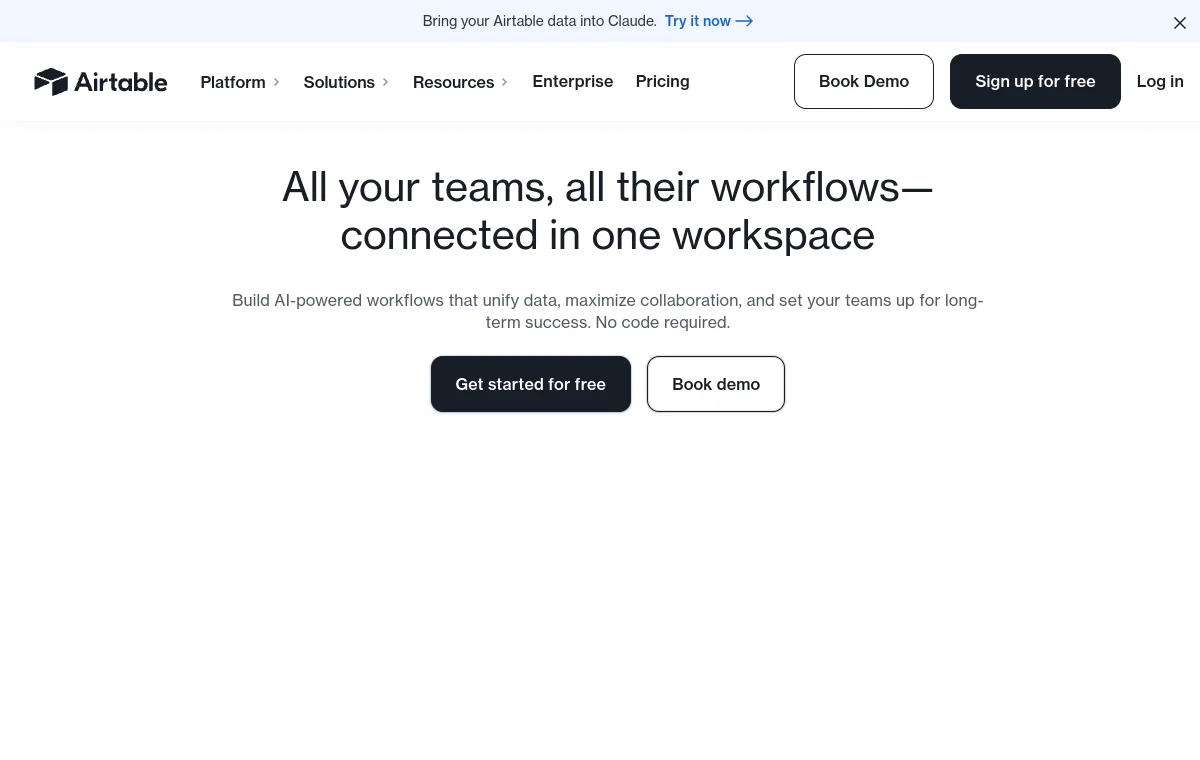
The Airtable design system captures the visual language of a well-known design and creative tools product. This DESIGN.md file distills its color palette, typography, spacing scale, and component patterns into a format that AI coding agents can read and follow when generating UI.
Database-spreadsheet hybrid. Colorful, structured data UI.
AI agents like Cursor, Claude Code, Codex, and Google Stitch can reference this file to produce UI that visually matches the Airtable aesthetic — consistent colors, proportional spacing, and recognizable component patterns — without requiring explicit pixel-by-pixel instructions for every element.
Browse more design and creative tools design systems or explore the full DESIGN.md directory.
Color System
Brand palette extracted from the design system. Click any swatch to copy the hex value.
Text / Primary
#181d26
Accent
#1b61c9
Surface / Background
#011435
Border / Subtle
#333333
Color Tokens
Typography Specimen
Haas
Display
2.8rem / 700 / 1.04
The quick brown fox
Heading H1
2rem / 700 / 1.1
The quick brown fox jumps
Heading H2
1.5rem / 600 / 1.15
The quick brown fox jumps over
Heading H3
1.125rem / 600 / 1.2
The quick brown fox jumps over the lazy
Body
1rem / 400 / 1.5
The quick brown fox jumps over the lazy dog
Small / Caption
0.75rem / 400 / 1.5
The quick brown fox jumps over the lazy dog and sat down.
Monospace
const primary = "System";
Layout & Spacing Tokens
Spacing Scale
Border Radius
Elevation & Shadow
Use with AI Coding Agents
Copy one of these prompts into your AI coding agent to apply the Airtable design system to your project. The DESIGN.md file in your repo root is the source of truth.
# .cursor/rules (or DESIGN.md)
You are working in a project that uses the Airtable design system.

Read the DESIGN.md file in this project root and follow it strictly when generating UI.
Match the brand's exact colors, typography, spacing scale, and border radius.
Do not create generic Tailwind UI — apply the visual language from DESIGN.md.

Key rules:
- Use the defined color palette, not arbitrary hex values
- Apply the correct font family and weight scale
- Follow spacing tokens (4/8/12/16/24/32px scale)
- Match component patterns: buttons, cards, inputs, badges as specified